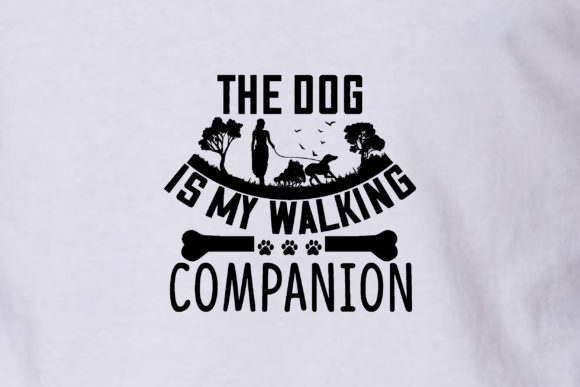
The Dog is My Walking Companion
A Warm, Witty Design That Fits Real Life—Not Just the Hoop
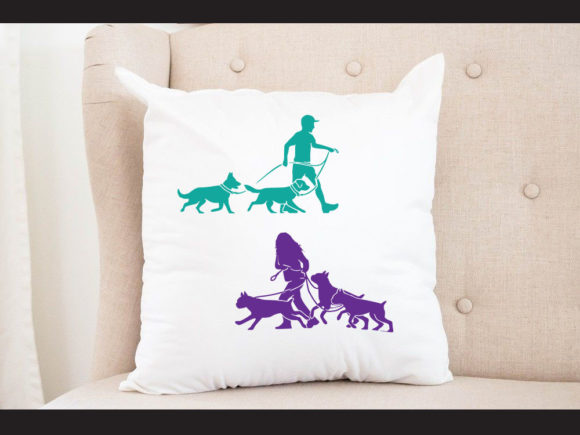
As someone who’s stitched hundreds of custom pieces—from boutique baby onesies to Etsy best-selling tote bags—I opened The Dog is My Walking Companion expecting charm. What I got was something more useful: a design with quiet confidence. It’s not overly detailed or fussy, but it carries clear personality—friendly, grounded, and just a little wry. The dog sits relaxed, leash loosely coiled, and the text wraps gently around the shape like a shared secret between owner and pet. It reads as handmade without trying too hard, which matters when your customers are buying for emotional resonance—not just decoration.
Where It Shines: Tote Bags, Sweatshirts, and Thoughtful Gifts
I tested The Dog is My Walking Companion on a natural canvas tote (medium-weight, tightly woven) and a midweight cotton-blend sweatshirt—two staples in my craft business. On both, the design held up beautifully. The lettering stayed legible at 3.5 inches wide, and the dog’s outline had enough clean curve to read clearly in satin stitch without collapsing into fill-heavy density. It’s ideal for embroidered patches too—the balanced negative space lets the fabric breathe, so the finished patch lies flat and wears well.
For baby embroidery? Use it sparingly—think a single small version (2.25" max) on a burp cloth or blanket corner. The sentiment fits nursery decor perfectly, especially paired with soft grays or sage greens. As holiday embroidery? It’s unexpectedly strong on tea towels or kitchen aprons—warm, human, and quietly festive without bells or bows. And for Etsy sellers: this design feels like a story waiting to be told. Customers don’t just buy “a dog graphic”—they buy connection. That lifts perceived value, builds trust, and makes your handmade product feel intentional, not generic.
Where to Pause—and Why
The Dog is My Walking Companion isn’t built for every surface. Avoid it on highly textured fabrics (like bouclé or thick terry) unless you’re willing to add extra stabilizer and reduce stitch density manually—it doesn’t have the bold line weight to punch through heavy texture cleanly. On stretchy knits (think lightweight tees), stabilize aggressively and consider simplifying the text to a single-line font if you’re digitizing further—you’ll preserve clarity without puckering.
Small hoop sizes (under 4x4") demand caution. The current layout assumes breathing room; shrinking it below 3" risks losing legibility in the tail end of “Companion.” Also, avoid dense black-on-black combos on dark fabric unless you confirm thread contrast in person—digital mockups lie. And skip curved surfaces like caps unless you’re experienced with cap frames: the gentle arc of the text doesn’t adapt easily to tight crowns without distortion.
Design Assets That Support—Not Sabotage—Your Craft Business
The file package—SVG, DXF, EPS, PNG—gives real flexibility. SVG and DXF work cleanly in most embroidery software for redigitizing. EPS holds up in vector-based mockup tools, and PNG lets you drop it straight into Canva or Adobe Express for quick Etsy listing visuals. As a graphics asset, it’s versatile—but remember: these are *starting points*, not final embroidery files. You’ll still need to digitize for machine embroidery design use, adjust stitch density for your fabric, and test run the applique design or fill-stitch balance before committing to client work.
What Your Customers Actually Notice (and Why It Matters)
People don’t scan embroidery for technical perfection—they feel it. With The Dog is My Walking Companion, they notice warmth first. Then recognition: “That’s *my* walk. That’s *my* dog.” That emotional hook translates directly to giftability. I’ve seen this design turn a simple pillow cover into a wedding gift that got framed after the honeymoon. It also strengthens brand consistency for small shop owners—if your shop leans into cozy, authentic, everyday joy, this design reinforces that voice without shouting.
But here’s what’s easy to miss: how much the *simplicity* supports professionalism. There’s no tiny serifed “i” dot or fragile whisker line that vanishes in running stitch. That means fewer re-stitches, less customer follow-up about “fuzzy edges,” and smoother production flow for commercial embroidery projects. For digital product sellers, offering this as part of a “Pet Lover Bundle” makes sense—but only if licensing allows resale of finished items. Always double-check before listing.
Practical Designer Notes Before You Stitch
- Test first—on scrap fabric matching your final project’s weight and stretch.
- Check thread color contrast on both light and dark backgrounds using physical thread swatches, not screen previews.
- Review stitch density—especially where the leash meets the dog’s collar. Too dense = stiff; too sparse = weak definition.
- Confirm hoop size—this design lands comfortably in a 5x7", but verify your machine’s actual usable area.
- Inspect small details in your embroidery software: does the “o” in “Dog” hold its shape? Does the leash taper cleanly?
- Try black-and-white mockups—they reveal contrast issues faster than color.
- Use appropriate stabilizer: cutaway for knits, tear-away for stable wovens, fusible for lightweight linens.
- Verify licensing before selling finished products or bundling the digital embroidery file—especially for Etsy or wholesale.
Final Thought: A Design That Walks With You
The Dog is My Walking Companion isn’t flashy—but then, neither are the best walks. It’s steady, companionable, and quietly memorable. For crafters building real businesses, it’s the kind of design that earns repeat customers, not just one-time sales. It works on sweatshirts you’d wear yourself, on baby blankets you’d hand-stitch with care, on tote bags that get carried daily—not displayed. In a market crowded with overdesigned graphics, its restraint is its strength. Just remember: even the friendliest dog needs the right leash, the right path, and the right preparation. So do your stitches.