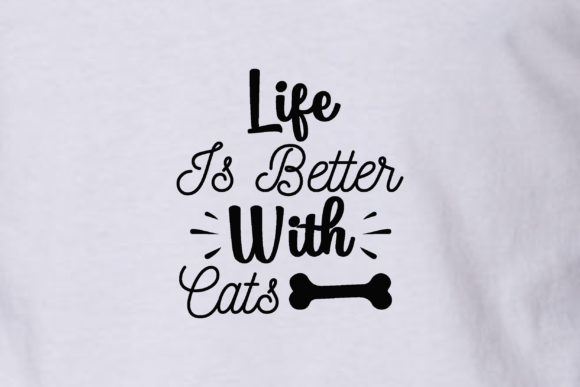
Life is Better with Cats
A Designer’s First Look: Charm, Clarity, and Craftsmanship
When I opened Life is Better with Cats for the first time, I wasn’t scanning for “cute”—I was scanning for *stitchability*. As someone who’s digitized, tested, and shipped hundreds of embroidery files for small shops and Etsy sellers, my gut reaction matters more than aesthetics alone. This design lands with quiet confidence: clean lines, balanced negative space, and a gentle, hand-drawn rhythm—not too tight, not too loose. The cats are stylized but recognizable, their poses relaxed and affectionate. No frantic whiskers or over-rendered fur. That tells me it’s built for real-world stitching, not just screen appeal.
Where It Shines: Real Projects, Real Customers
I recently used Life is Better with Cats on a batch of organic cotton tote bags for a local boutique—no logos, no branding, just the design centered on the front panel. It worked beautifully. Why? Because the layout breathes. There’s enough clearance around the outer edges to avoid hoop marks, and the lettering flows without crowding the feline silhouettes. On sweatshirts, it held up across ribbed cuffs and curved seams when paired with medium-weight cutaway stabilizer. For baby onesies? I resized it down to 3.2 inches wide and ran a test on bamboo jersey—yes, it stitched cleanly, but only because I reduced stitch density manually and added tear-away + topping. That’s not a flaw in Life is Better with Cats; it’s a reminder that good design invites thoughtful execution.
This isn’t a one-size-fits-all machine embroidery design. It thrives where warmth and approachability matter: nursery wall hangings, kitchen tea towels for cat-loving chefs, embroidered patches sewn onto denim jackets, even subtle cap fronts for indie pet shops. Its tone is friendly, not flashy—ideal for handmade product lines that prioritize authenticity over trend-chasing.
Where to Proceed With Care
Life is Better with Cats doesn’t hide its limits—and that’s part of its integrity. On dark fabric, the fine interior details (like the subtle curve of a tail or delicate paw outlines) can blur unless you choose high-contrast thread colors and adjust underlay. On stretchy knits or thin voile, skip the satin stitch-heavy versions unless you’re using proper stabilizer layers—this isn’t an applique design begging for raw-edge flair; it’s a fill-and-outline workhorse that needs support.
Curved surfaces like baseball caps require careful placement: center the design low on the front panel, avoid the crown seam, and always test stitch before committing. Tiny corners—say, on a 2-inch square pillow cover—won’t hold the full composition gracefully. In those cases, isolate one cat or use just the phrase “Life is Better” as a standalone motif. Also, while the included SVG, DXF, EPS, and PNG files give flexibility for vector editing or print mockups, remember: none of these are native embroidery formats. You’ll need to digitize them properly—or confirm your digitizer has already optimized the file for stitch density, jump stitches, and underlay logic.
What It Adds to Your Finished Product
Customers don’t buy embroidery—they buy feeling. Life is Better with Cats delivers sincerity, not sarcasm. When stitched well, it reads as intentional, not clip-art. That builds trust: buyers sense care in the handmade product, whether it’s a personalized gift for a friend’s birthday or a curated item in your Etsy shop. It supports brand consistency for craft businesses that lean into cozy, mindful, or pet-positive values—no jarring contrast with your other design assets.
Visually, it enhances giftability. A linen pillow cover with this design feels special without being ornate. A holiday embroidery on a wool blend blanket? It reads as heirloom-quality, especially when stitched in matte cotton thread rather than glossy poly. And yes—it performs in digital spaces too: the PNG renders crisply in printable mockups, and the vector files scale cleanly for social media banners or shop headers. Just keep licensing in mind: since this is listed as a Graphics product under Crafts, verify whether commercial use (e.g., selling finished embroidered items or reselling the digital file) is permitted before listing on Etsy or at a craft fair.
Practical Notes Every Embroidery Designer Should Run Through
- Always test on scrap fabric first—especially if using textured weaves or blends.
- Check thread color contrast on both light and dark backgrounds before finalizing.
- Review stitch density: dense fills may pucker thin fabrics; loosen if needed.
- Confirm hoop size compatibility—the original layout fits comfortably in a 5×7 hoop, but resizing down for baby items may push detail fidelity.
- Inspect small details under magnification: tiny eyes or whiskers should be at least 0.8mm wide for reliable stitching.
- Test black-and-white mockups to assess visual weight and legibility at smaller sizes.
- Use appropriate stabilizer: cutaway for knits, tear-away for stable wovens, topping for napped fabrics.
- Verify dual-use suitability: does your workflow allow this embroidery file for both personal keepsakes and commercial embroidery projects?
- Confirm licensing terms before selling finished products or bundling with other digital embroidery files.
Final Thought: Design That Serves the Maker
Life is Better with Cats isn’t trying to be everything. It’s a focused, well-considered embroidery file that respects the craft behind it. It doesn’t shout. It settles in—on fabric, on shelves, in customers’ hands. If you’re curating design assets for a growing craft business, building a signature line of personalized gifts, or simply choosing your next small shop product, this one earns its place. Not because it’s trendy, but because it stitches true, sells with heart, and leaves room—for cats, for calm, and for the quiet pride of making something well.