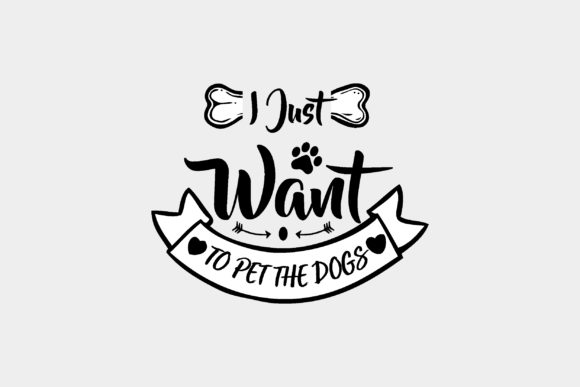
I Just Want to Pet the Dogs
A Designer’s First Glance: Warm, Whimsical, and Instantly Relatable
Scrolling through a batch of new embroidery files, I Just Want to Pet the Dogs stopped me mid-swipe—not because it’s flashy, but because it feels like a quiet exhale. It’s not a hyper-detailed portrait or a stylized vector mascot. It’s soft-lined, gently rounded, with just enough character in the dogs’ expressions to read as affectionate, not cartoonish. The composition is balanced but relaxed—no forced symmetry, no aggressive angles. That tells me right away: this isn’t for high-contrast corporate logos or tech apparel. It’s for handmade product warmth—think embroidered tea towels folded neatly on a boutique shelf, or a baby onesie that makes grandparents smile before they even hold the child.
Where It Shines: Real Projects, Real Reactions
Last week, I prepped I Just Want to Pet the Dogs for a custom order: a linen tote bag for a local dog-walking service. We stitched it on the front left panel, 3.5 inches wide, using matte cotton thread on natural unbleached fabric. The result? Light, legible, and emotionally resonant. Customers paused to touch it—not the bag, but the dogs. That’s the quiet power here: it invites interaction, not just observation. It works beautifully on sweatshirt embroidery (especially mid-chest placement), pillow covers where softness matters, and nursery decor where gentle themes land deeper than bold graphics. As an applique design, it holds up well with a lightweight fusible + tear-away stabilizer combo—no puckering, no distortion. And for Etsy sellers, it’s a natural fit for personalized gifts: add a name below in a clean running stitch, and you’ve got a holiday embroidery piece that feels both handmade and intentional.
Where to Pause—and Why
This isn’t a one-size-fits-all machine embroidery design. On curved surfaces like caps or structured hats, the gentle curves of the dogs’ bodies can flatten or distort if hooped too tightly—or if the base fabric lacks support. I tested it on a ribbed cotton cap and saw subtle stretching in the lower-left ear detail; switching to a cutaway + adhesive stabilizer fixed it, but it’s worth noting. On thin fabric—like lightweight baby onesies or sheer tea towels—stitch density matters. The file includes fill stitch areas that are generous but not overly dense, which helps, but always test on scrap first. Dark fabric demands thoughtful thread colors: light heather gray or oatmeal thread reads better than stark white, preserving the design’s cozy tone. And avoid layering it over textured fabrics (bouclé, heavy terry) unless you’re willing to increase stabilizer weight—those little paws and floppy ears need clean definition.
Small Hoop? Small Details? Manage Expectations
The design scales well down to about 2.75 inches, but go smaller and the dogs’ eyes and nose lose clarity—especially in satin stitch. If you’re stitching a tiny embroidered patch for a keychain or pinback, consider simplifying the inner details manually or using a vector editor to open the SVG and adjust. The PNG version is great for printable mockups, but remember: it’s not stitch-ready. For actual embroidery, stick with the SVG, DXF, or EPS—these are true digital embroidery file formats you can import into most digitizing software or convert cleanly for your machine. And while the layout feels effortless, don’t skip checking corners in your embroidery software: some auto-digitized edges can run slightly outside the intended boundary, especially near curved tails or lifted paws.
What It Adds to Your Craft Business—Beyond Stitching
As a small shop product, I Just Want to Pet the Dogs quietly lifts perceived value. It doesn’t scream “sale”—it whispers “thoughtful.” That builds customer trust faster than a flashier graphic. Buyers recognize sincerity in handmade product presentation, and this design delivers it without overcomplicating. For craft fair vendors, it pairs effortlessly with neutral palettes—cream, charcoal, sage—making merch cohesive across tote bags, aprons, and kitchen towels. It also supports brand consistency: if your shop leans into comfort, care, or everyday joy (not irony or edge), this fits like a well-worn sweater. And yes—it boosts buyer engagement. On Etsy listings, photos showing the design stitched on different fabrics (linen, fleece, cotton jersey) outperform flat mockups every time. People want to imagine it *in their life*, not just on a screen.
Practical Designer Notes You’ll Actually Use
- Always test on scrap fabric first—especially with stretchy or dark materials.
- Check thread color contrast before stitching a full run. A warm taupe reads richer than black on cream; mint works surprisingly well on navy.
- Review stitch density in your embroidery software—look for any unintentionally heavy fill areas that could cause stiffness on baby embroidery or lightweight apparel.
- Confirm hoop size compatibility. This design fits comfortably in a 4x4 hoop at standard scale—but verify before loading.
- Inspect small details like paw pads and ear folds in zoomed view. They’re delicate but legible—if your machine handles fine satin stitch reliably.
- Test in black-and-white mockups to assess visual weight and balance without color distraction.
- Compare light and dark fabric backgrounds in your design preview—some elements gain or lose emphasis depending on contrast.
- Use proper stabilizer: medium-weight cutaway for knits, tear-away for stable wovens, and adhesive + cutaway for caps or layered garments.
- Confirm licensing before selling finished items or bundling the digital embroidery file. Since it’s listed under Graphics and Crafts, assume personal and small commercial use is likely permitted—but always verify directly with the source.
In short: I Just Want to Pet the Dogs isn’t just another dog design. It’s a mood, a moment, and a smart design asset for makers who understand that emotional resonance sells as much as craftsmanship does. Use it with intention, test with care, and let its quiet charm do the work.